



CouchPotato

![[Computer » Commodore 64/128]](/static/media/platform/symbol/platform_computer_c64.gif) Platform - Computer » Commodore 64/128
Platform - Computer » Commodore 64/128
Things that should be added under this platform:
- songs ripped or recorded from C64/128 games on actual system or emulator
- emulated or actual SID tracks
----------------------------------------
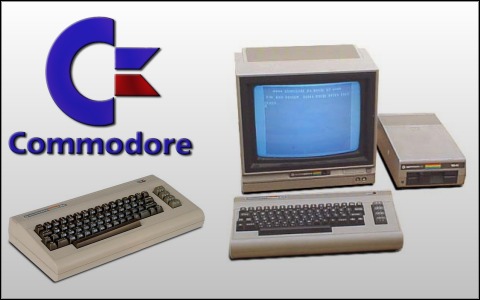
Commodore 64, released in 1982, was not only the best selling computer of 1980s (17 million units) but also its SID sound chip is the most celebrated among game music listeners.
Engineer Robert Yannes who designed SID chip in 1981 thought that sound chips of other computers were "primitive" of their design and planned by people who did not know much about music. He used five months to develop the chip with two technicians. Some of planned features were not included to the final product due to shortage of time. The final product however contained things such as the envelope generator that could not be found from sound chips of other computers.
Composers such as Rob Hubbard, Martin Galway, Jeroen Tel, David Whittaker and Ben Daglish utilized the SID chip to create some of the most popular game music songs ever. Often they coded music directly with assembly language instead of using music composing programs.
Though the machine was already available in 1982, it was not until 1985 that Hubbard's music in particular the song from the game "Monty on the Run" made people to realize the possibilities of game music. Galway and Whittaker released some of their most famous songs in the following year and many other musicians soon followed the footsteps of these pioneers.
Commodore 128, released in 1985, was an expanded version of C64. Due to its smaller user base, just few games took advantage of its new features.
MOS Technology 6581/8580 SID chip:
* 3-channel synthesizer with programmable ADSR envelope
* 8 octaves
* 4 waveforms: Triangle, Sawtooth, Variable pulse, Noise
* Oscillator synchronization, ring modulation
* Programmable filter: high pass, low pass, band pass, notch filter
There are different models of SIDs such as 6581-R2, 6581-R3, 6581-R4 and 8580-R5. They give slightly different output. Ideally, songs should be played with the same SID model that composer has used. If song has samples, then it is often the case that just one of these SID models plays the song in a proper manner while other models play samples either too loudly or too silently. Especially filters behaving differently on each SID revision gave headache for many SID composers who tried to get their routines to work fine on every C64.
SID emulation gives often decent results though occasionally there are considerable differences between authentic and emulated output. SID is hard to emulate perfectly due to its partly analog nature. C64 songs played on CVGM are authentic recordings.
 Songs
Songs


